The tech industry loves a treadmill. It wants us to keep running toward the next high resolution, battery hungry slab of glass. But sometimes, the most progressive move is a tactical retreat. My journey with the Samsung Galaxy series began in 2018 with the original Galaxy Watch, but long before that, my first smartwatch was a Pebble. When Eric Migicovsky announced the rebirth of the platform with the Core Pebble Time 2, the nostalgia was too strong to ignore.
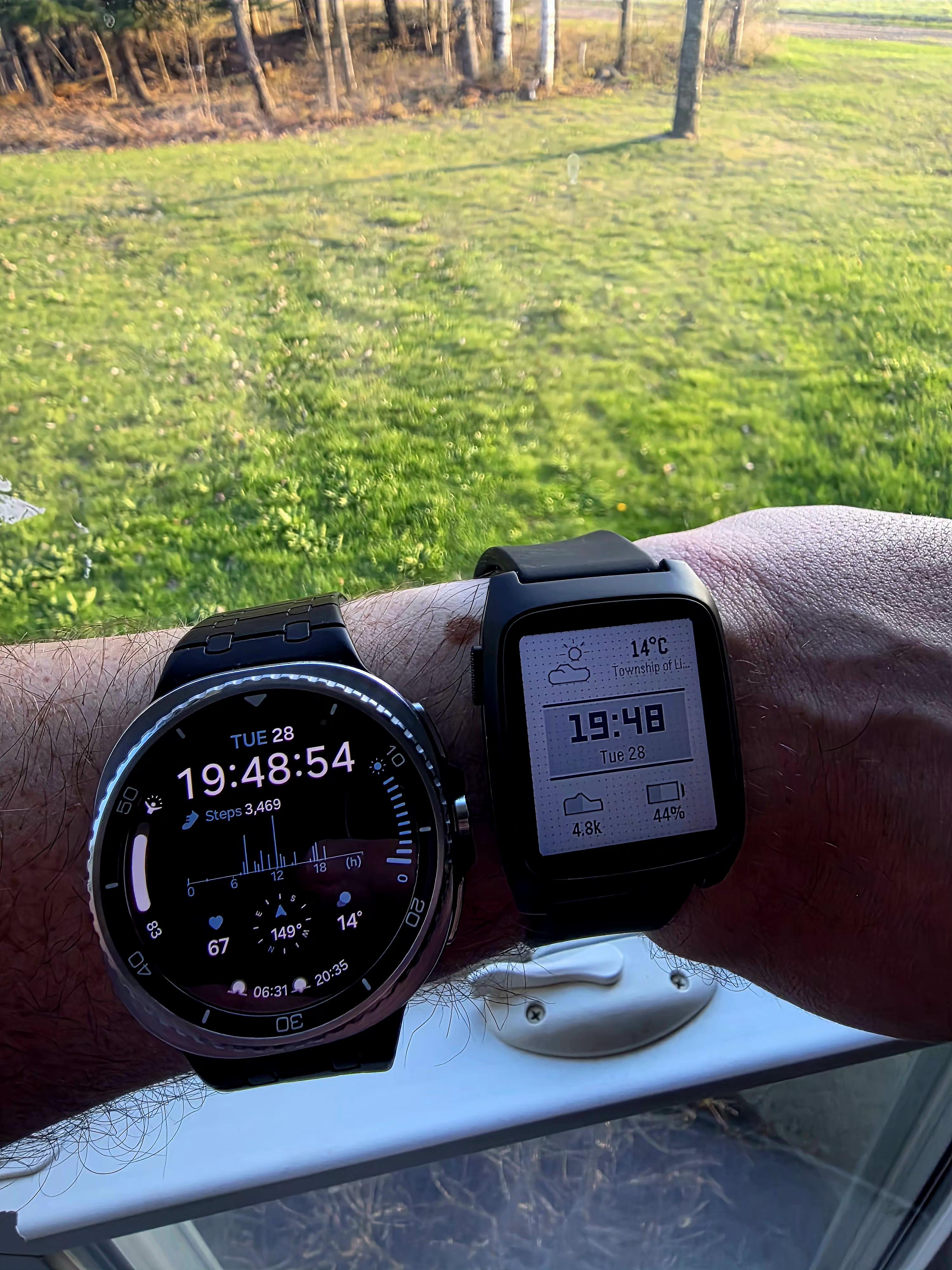
The Mission: Efficiency over Excess
I have always valued virtuous laziness, the idea that technology should do exactly what it needs to with zero friction. Moving back to an open data centric platform highlights the friction inherent in the closed alternatives. Here is how the transition looks after real world testing:
- Fitness & Running: I thought I would use my watch as the sole device I would carry. Spotify, YT Music, and Symfonium were great in theory, but the experience is incredibly clunky. In the end, I would just carry my phone anyway.
- Communication: I thought I would use my watch more to take calls and leave the phone at home or in another room. The mics and experience were simply so poor that I would end up with a notification and run to find the phone.
- The Payments Myth: I thought I would use NFC payments more on the watch, but because I always have my phone, it was always just simpler. If the running had been more standalone, maybe it would have clicked, but the experience was horrible. The same goes for using it for airline tickets with QR codes.
- Battery Independence: The battery life on the Pebble is amazing now. I am packing for a trip and if it was less than a week, I am not sure I would have even bothered with the very nifty little charger. The Samsung watch was dead in the water quick, and I frequently found myself in foreign countries looking for a MediaMarkt or Samsung store.
Tactical Comparison
| Feature | Galaxy Watch8 Classic | Core Pebble Time 2 |
|---|---|---|
| Display | 3,000 nit AMOLED (Touch) | 1.5” 64 colour E-Paper (Touch + Buttons) |
| Battery Life | ~30 Hours | ~30 Days (Estimated) |
| Connectivity | Wi-Fi, BT, LTE | Bluetooth Only |
| Payments/NFC | High Friction / Unused | None (Deliberately Omitted) |
| Dev Environment | Complex Wear OS | High Ease of Development |
Things I’ll Miss (and Things I Won’t)
It is not a perfect 1:1 trade. There are aspects of the modern ecosystem that were useful, if not essential:
- The Assistant: Google Assistant and Gemini were nifty and I did use them occasionally, but not enough to justify the overhead.
- Voice Typing: Google Voice Typing with Gboard is fantastic. Voice typing on the Pebble is slower, though still functional for quick replies.
The Final Verdict
The move to the Time 2 is a vote for digital sovereignty and reliability. Beyond the hardware, the ease of development on PebbleOS remains a primary draw. It is a platform that invites you to build for it rather than fight with it.
I am happy to bin the clunky standalone features for a watch that respects my time and stays out of the way until it is actually needed. It is time to stop charging my watch every night and get back to basics.